.png)
AI & Referrals: Warum die Zukunft des Recruitings nicht "entweder oder" heisst
.png)
.jpg)
Wo AI im Recruiting heute wirklich steht
Die Zahlen sprechen eine klare Sprache. Fast neun von zehn Unternehmen setzen inzwischen irgendeine Form von KI im Recruiting ein, meist beim ersten Screening von Bewerbungen. Der Anteil ist innerhalb von nur zwei Jahren massiv gestiegen. Gleichzeitig zeigt sich ein bemerkenswertes Detail: Über 80 Prozent der Recruiter wollen die finale Entscheidung trotzdem selbst treffen. AI soll unterstützen, nicht ersetzen.
Das ist kein Zufall, sondern eine Reaktion auf reale Probleme. Automatisiertes Screening auf Basis von Lebensläufen wird zunehmend unzuverlässig, nicht wegen der Technologie an sich, sondern weil die Datenbasis selbst unter Druck steht. Ein wachsender Teil der Kandidat:innen nutzt KI, um Lebensläufe zu optimieren oder gar zu fälschen, Interviews werden per Deepfake manipuliert. Die Verifikation echter Qualifikationen wird damit zur zentralen Herausforderung der nächsten Jahre. Wichtiger als reines Sourcing.
Warum menschliche Netzwerke gerade jetzt an Wert gewinnen
Genau hier kommt die zweite grosse Entwicklung ins Spiel: Empfehlungsrecruiting erlebt eine Renaissance. Über 80 Prozent der Unternehmen betreiben heute ein Referral-Programm, und das aus gutem Grund. Über Referrals eingestellte Mitarbeitende werden im Schnitt deutlich schneller eingestellt als Kandidat:innen aus klassischen Kanälen, bleiben länger im Unternehmen und passen kulturell oft besser. In einer Welt, in der Vertrauen in Lebensläufe und Interviews bröckelt, wird die Empfehlung eines Menschen, der die Person und den Job gleichermassen kennt, zum verlässlichsten Signal überhaupt.
Das Spannende: AI und Referrals schliessen sich nicht aus, sie verstärken sich gegenseitig. Intelligente Systeme können erkennen, wer im eigenen Netzwerk, Mitarbeitende, Alumni, ehemalige Kolleg:innen, zu einer offenen Stelle passen könnte, und genau zum richtigen Zeitpunkt daran erinnern. Studien zeigen, dass automatisierte, KI-gestützte Erinnerungen und Empfehlungsvorschläge die Beteiligung an Referral-Programmen um bis zu 65 Prozent steigern können. AI wird damit nicht zum Ersatz für menschliche Beziehungen, sondern zum Verstärker, der sie erst richtig nutzbar macht.
Wie wir das bei chainstaff denken
Genau auf dieser Überzeugung ist chainstaff aufgebaut: Menschliche Verbindungen sind und bleiben der wertvollste Vertrauens-Layer im Recruiting. Gerade weil AI die Landschaft drumherum so stark verändert. Statt AI einzusetzen, um Menschen aus dem Prozess zu drängen, nutzen wir sie, um verborgene Netzwerke sichtbar zu machen. Unser System erkennt, wenn eine offene Stelle zum Netzwerk eines Nutzers passen könnte, und schlägt die Verbindung aktiv vor. Über Mitarbeitende hinaus auch über Alumni und externe Kontakte.
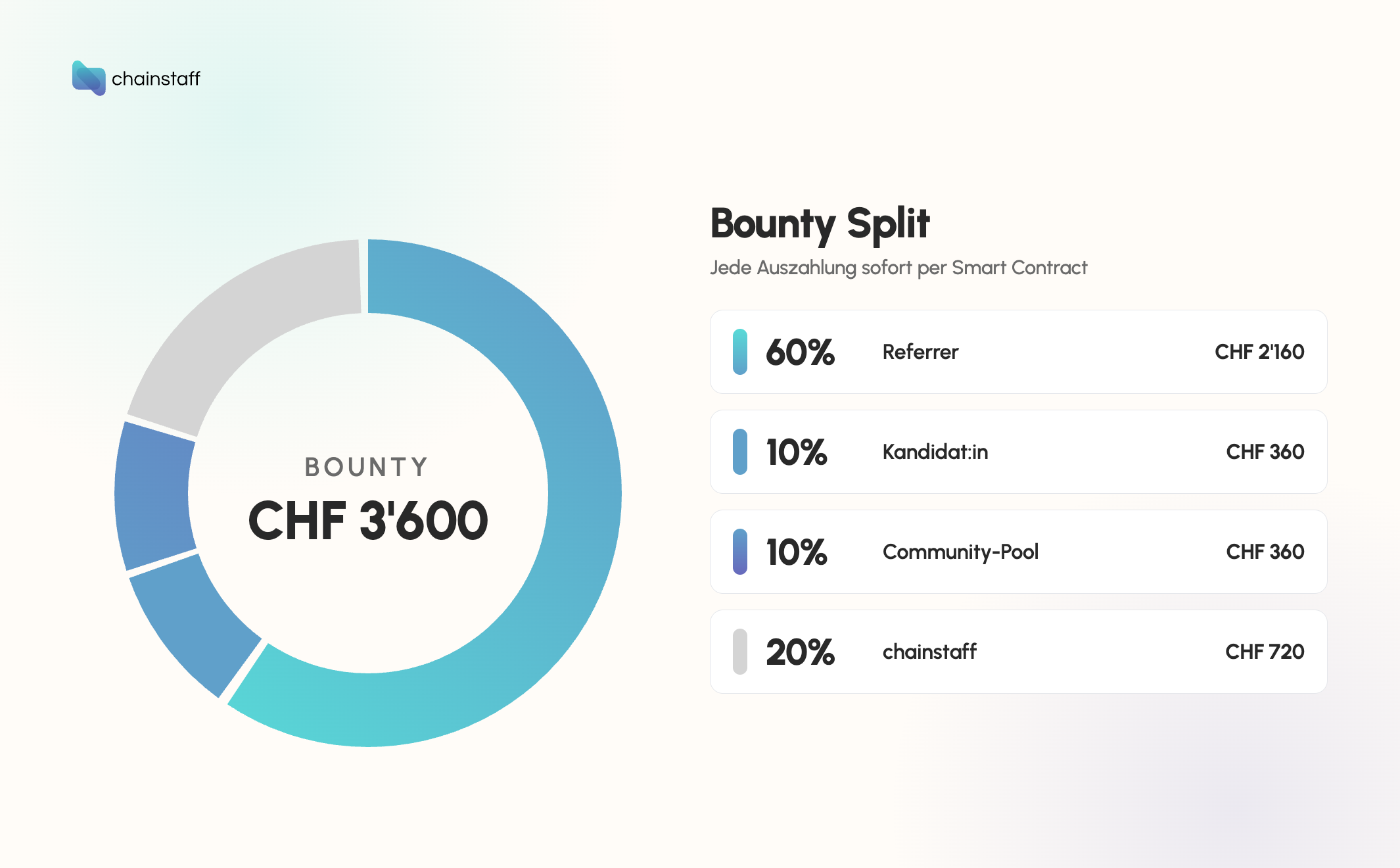
Wir gehen dabei bewusst über das klassische "ein Mitarbeiter empfiehlt eine Person"-Modell hinaus. Bei chainstaff ist eine Empfehlung oft Teamarbeit: Mehrere Personen tragen dazu bei, dass ein:e Kandidat:in überhaupt gefunden und überzeugt wird. Deshalb teilen wir die Prämie auf, 60 Prozent gehen an die referierende Person, 10 Prozent an die Kandidat:in selbst, 10 Prozent fliessen in einen gemeinsamen Community-Pool. Das bildet ab, wie Empfehlungen in der Realität tatsächlich entstehen: selten linear, meist als Netzwerkeffekt.
Unser KI-Agent Staffy übernimmt dabei die Rolle des stillen Vermittlers im Hintergrund: Er hilft, offene Stellen mit dem richtigen Netzwerk zu verbinden, ohne dass Nutzer:innen aktiv suchen müssen. Die Auszahlung der Prämien läuft anschliessend automatisiert und transparent über Smart Contracts. Schnell, nachvollziehbar, ohne Papierkram.
Die Zukunft des Recruitings gehört nicht der AI allein und nicht dem klassischen Netzwerken allein. Sie gehört den Unternehmen, die verstehen, wie beides zusammenspielt.
Stories, Tips & Smart Workflows

%20(1).png)
.png)
.svg)